time: 00:12:55
状语在句子中的应用
appoint sb to somewhere 委任某人 接任某个职位/管辖某个机构
content sb with sth 用什么东西来满足sb
1.Seeking a competitive advantage, the companies are now considering to adopt unconditional guarantees to cater the customers' needs.(真题)
谓语动词:
Seeking ing形式, 不是谓语
are 助动词, + 后方ing形式, 形成孕妇法则
are considering
主语: the companies
宾语: to adopt
主谓宾
Seeking a competitive advantage: 前方没名词, 所以不是定语. 这个是状语, 修饰: .v, .adj, .adv
to cater the customers' needs: 前方是 guarantees 名词, 这是后置定语
Seeking /si:kɪŋ/ v. 寻找;谋求(seek的ing形式)
competitive /kəmˈpetətɪv/ adj. 竞争的;比赛的;求胜心切的
advantage /ədˈvɑːntɪdʒ/ n. 优势;利益;有利条件 vi. 获利 vt. 有利于;使处于优势
considering /kənˈsɪdərɪŋ/ prep. 考虑到;就...而论 conj. 考虑到 v. 考虑到(consider的ing形式)
adopt /əˈdɒpt/ vt. 采取;接受;收养;正式通过 vi. 采取;过继
unconditional /ˌʌnkənˈdɪʃənl/ adj. 无条件的;绝对的;无限制的
guarantees /ˌɡærənˈtiːz/ v. 保证(guarantee的第三人称单数) n. 保证,[法] 担保;抵押物(guarantee的复数)
cater /ˈkeɪtə(r)/ vt. 投合,迎合;满足需要;提供饮食及服务
=> 寻求竞争优势, 公司考虑去采取 迎合客户的需求的(后置定语修饰名词guarantees) 无条件担保.
=> 因为寻求竞争优势, 公司正在考虑采取 (去迎合顾客需求的) 无理由担保.
2.Working with the American Statistical Association, the journal has appointed seven experts to a statistics board of reviewing editors. (2015真题)
谓语动词: has appointed
appoint sb to somewhere 委任某人 接任某个职位/管辖某个机构, 所以这个to是补语
主语: the journal
宾语: seven experts
补语: to ...
状语 + 主谓宾补
Working with 处理, 一起工作, 与...合作
Statistical /stəˈtɪstɪkl/ adj.统计的, 统计学的
Association /əˌsəʊsiˈeɪʃn; əˌsəʊʃiˈeɪʃn/ n. 协会,联盟,社团;联合;联想
journal /ˈdʒɜːnl/ n. 日报,杂志,杂志社;日记;分类账
appoint /əˈpɔɪnt/ vt. 任命;指定;约定 vi. 任命;委派
expert /ˈekspɜːt/ n. 专家;行家;能手 adj. 熟练的;内行的;老练的 v. 当专家
statistic /stəˈtɪstɪk/ n. 统计资料;统计学;(一项)统计数据;统计量 adj. 统计的,统计学的
board /bɔːd/ n. 董事会;木板;甲板;膳食 vt. 上(飞机、车、船等);用板盖上;给提供膳宿 vi. 寄宿
reviewing /rɪˈvjuːɪŋ/ n. 回顾;评估;修订 v. 回顾;复习(review的ing形式);检验
editors /'editəz/ n. 编辑(editor的复数形式);编辑器;剪辑师
review
=> (因为/为了) + 和美国统计联盟一起合作, 杂志社已经委派7个专家 接任/管理 审核 编辑 统计(董事)会.
3.By offering on-trend items at dirt-cheap prices, these brands have hijacked fashion cycles, shaking an industry long accustomed to a seasonal pace. (2013)
offering /ˈɒfərɪŋ/ n. 提供;祭品;奉献物;牲礼 v. 提供(offer的ing形式)
trend /trend/ n. 趋势,倾向;走向 vi. 趋向,伸向 vt. 使…趋向
items /'aɪtəmz/ n. 项目;条目;(电视、广播或报纸上的一条)新闻(item 的复数) v. <古>估算;逐条记载(item 的第三人称单数)
dirt /dɜːt/ n. 污垢,泥土;灰尘,尘土;下流话
cheap /tʃiːp/ adj. 便宜的;小气的;不值钱的 adv. 便宜地
dirt cheap 特别便宜,相当便宜
brand /brænd/ n. 品牌,商标;烙铁 v. 败坏(某人)名声;给(牲畜)打烙印;谴责;加商标于;促销;铭记;给(产品)设计品牌
hijack /ˈhaɪdʒæk/ vt. 抢劫;揩油 vi. 拦路抢劫 n. 劫持;威逼;敲诈
fashion /ˈfæʃn/ n. 时尚;时装;样式;方式;时髦人物 vt. 使用;改变;做成…的形状
cycle /ˈsaɪkl/ n. 循环;周期;自行车;整套;一段时间 vt. 使循环;使轮转 vi. 循环;骑自行车;轮转
shaking /ˈʃeɪkɪŋ/ n. 震动;震惊;挥动,摇动 v. 握手;摇动;颤动;使劲甩动;扰乱(shake 的现在分词)
industry /ˈɪndəstri/ n. 产业;工业;勤勉
accustomed /əˈkʌstəmd/ adj. 习惯的;通常的;独有的 v. 使习惯于(accustom的过去分词)
seasonal /ˈsiːzənl/ adj. 季节的;周期性的;依照季节的
pace /peɪs/ n. 一步;步速;步伐;速度 vi. 踱步;缓慢而行 vt. 踱步于;用步测
谓语动词: hijacked
主语:
=> 为了提供超级便宜价格项目的趋势, 这些品牌抢劫了时尚圈, 扰乱一个产业长期习惯的 to 一个季节的步伐.(正确性???)
=> 通过以极低的价格提供流行商品,这些品牌劫持了时尚周期,动摇了一个长期习惯于季节性节奏的行业。(有道)
time: 00:38:23
4.One, having seen the vastness of an ocean, will never content himself with a pool of water.
谓语动词: will never content, will+content构成孕妇法则
主谓宾补, content sb with sth 用什么东西来满足sb, with a pool water修饰himself
=> 一个人, 看见了大海的广阔, 永远不会满足于一池子的水.
=> 曾经沧海难为水.
One, having viewed the clouds over the Wu Mount, will call nothing else a cloud.
=> 除却巴山不是云.
time: 00:42:50
3.特殊“done”
语态 | 时态 | |
having done | having是doing变形, 主动 | 过去/完成 |
being done | 被动 | 进行 |
to be done | 被动 | 将来(即将被完成) |
time: 00:47:09
感受的词全部是被动语态: 兴趣, 兴奋, 爽, 悲伤, 激动, 劳累, 满意
Being interested 被动 + 进行, 正在对...产生兴趣
Being interested in the relationship of language and thought, Whorf developed the idea that the structure of language determines the structure of habitual thought in a society. (2004)
谓语动词: developed
Being interested 被动 + 进行, 正在对...产生兴趣
=>
1.The young athlete is running towards the destination, ___with a smile on his face.
A.satisfied 被动, 无时态 √
B.satisfying 主动, 进行
C.to be satisfied 被动, 将来
D.having satisfied 主动, 过去/完成
分析: ___里的单词前方没有.n, 所以后半句是状语. 状语和主语一致,修饰主语.
athlete /ˈæθliːt/ n. 运动员,体育家;身强力壮的人
satisfied /ˈsætɪsfaɪd/ adj. 感到满意的 v. 使满意(satisfy的过去式)
运动员满意, 由于感受的词都是被动语态
2.___, your composition is full of mistakes.
A.Writing carelessly 主动
B.Written carelessly 被动, 完成 √
C.Having written carelessly having done, 主动, 过去/完成
D.Being written carelessly being done, 被动, 进行时
___, 前半部分是状语, 修饰主语作文, 作文被写, 所以是被动语态
carelessly /ˈkeələsli/ adv. 粗心地;不注意地;无忧无虑地, care + less + ly
composition /ˌkɒmpəˈzɪʃn/ n. 作文,作曲,作品;[材] 构成;合成物;成分
time: 01:07:05
6. 进阶篇:状语写作应用
本节重点:
非谓语玩转横二写作
have affection 喜欢某人, I have affection for you. 我喜欢你.
中文很多谓语的时候:
1.青铜: 并列句;
2.白银: 多个简单句;
3.黄金: 主干+状语(主语一致: doing..., to do..., done..., adj..., prep...)
4.钻石: 主干+独立主格 (主语不一致的时候, 独立主格[我爱你, with+sb你爱她])
我爱你, 爱着你.
I love you, + 后方状语: 主干+状语(主语一致: doing..., to do..., done..., adj..., prep...)
=> 主动爱: loving you.
=> I love you, loving you. //太土了, 土上加土, 少年闰土...
=> I love you, breathing you.
=> I love you, having affection you. //affection /əˈfekʃn/ n. 喜爱,感情;影响;感染
我喜欢她, 她很美.
分析: 前后2句主语不一致
1.将主语变成一致: 她被我喜欢, 她很美.
=> She is loved by me, beautiful.
=> She is loved by me, very beautiful. //自己写的, 对否?
=> She is loved by me, impossibly beautiful. 她被我爱着, (她)难以置信地美. 后半句是状语, adj...
2.主语不一致, 独立主格[主语1, with sb ...]
=> I like her, (with) she beautiful. //she:第2句的主语
=> I like her, (with) she very beautiful.
=> I like her, (with) she impossibly beautiful.
time: 01:21:45
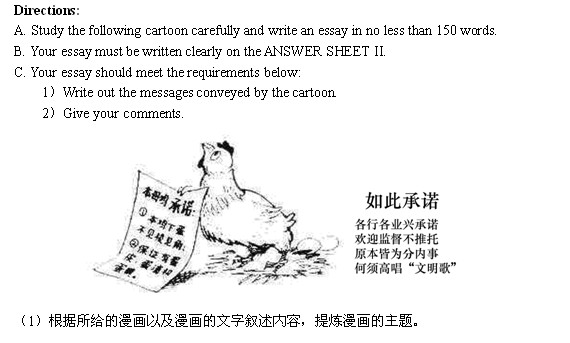
=> 一只母鸡仰望天空, 拿了张白纸, 内容显示着承诺.
=> A hen looks up into the sky, + 状语: doing..., to do..., done..., adj..., prep...
=> A hen looks up into the sky, holding/taking(主动拿) a piece of white paper, + (纸上)内容显示着承诺.(主语是纸, 主动显示)
=> A hen looks up into the sky, holding/taking a piece of white paper, (with) the content showing the promise.
time: 01:26:30
陪伴班范文背诵版:
see/look/regard ... as 将...视为
图片向我们传达的含义很明显:中国的国家文化已经渗透到许多国家,变得越来越国际化。那么,这张照片所反映的现象背后隐藏的原因是什么?首先,随着改革开放政策得以实施,中国文化逐渐吸引了全世界越来越多的人对中国有更深入的了解。此外,有些人,尤其是年轻人,将异国情调视为时髦的东西,将所有的精力和热情投入到体验来自其他文化的事物中。最后,兴起的信息技术是幕后的另一个推动力,这使得传播有关不同文化的信息更加容易。
写作, (定语), [状语]:
(图片向我们传达的)含义很明显:
=> The implication is very obvious //含义很明显 + 图片向我们传达的(被传达)↓
=> The implication conveyed by the picture to us is very obvious, //在名词后面加三姑六婆
(中国的国家)文化已经渗透到许多国家,[变得越来越国际化]。
penetrate /ˈpenətreɪt/ vt. 渗透;穿透;洞察 vi. 渗透;刺入;看透
increasingly /ɪnˈkriːsɪŋli/ adv. 越来越多地;渐增地
=> the culture has penetrated into many countries, //文化已经渗透到许多国家 + (中国的国家)↓
=> the Chinese national culture has penetrated into many countries, + [变得越来越国际化]。↓ //伴随状语
=> the Chinese national culture has penetrated into many countries, becoming increasingly globalization. //more and more可否??
那么,(这张照片所反映的现象背后隐藏的)原因是什么?
phenomenon /fəˈnɒmɪnən/ n. 现象;奇迹;杰出的人才
reflect 反应
=> Then, what are the reasons? 那么, 原因是什么? + (这张照片所反映的现象背后隐藏的)↓
=> Then, what are the invisible reasons behind the phenomenon reflected by this picture? //invisible是形容词, 三姑, 放前
独立主格↓(单独主语) 独立主格↓(单独主语)
首先,[随着改革开放政策得以实施],中国文化逐渐吸引了(全世界越来越多的)人对中国有更深入的了解。
policy 政策
Reform and Open 改革开放
implement 实施
gradually /'grædʒʊəli/ adv. 逐步地;渐渐地
attract /ə'trækt/ vt. 吸引;引起 vi. 吸引;有吸引力
increasing /ɪnˈkriːsɪŋ/ adj. 越来越多的,渐增的 v. 增加,加大(increase的ing形式)
=> First of all, (with) the policy of Reform and Open implemented, Chinese culture gradually attracts increasing number of people to have deeper understanding of Chine。
此外,有些人,[尤其是年轻人],将异国情调视为时髦的东西,[将所有的精力和热情投入到体验(来自其他文化的)事物中]。
see/look/regard ... as 将...视为
exotic /,iɡ'zɔtik/ adj. 异国的;外来的;异国情调的
foreign /'fɒrɪn/ adj. 外国的;外交的;异质的;不相关的
fashionable /'fæʃ(ə)nəb(ə)l/ adj. 流行的;时髦的;上流社会的
=> What's more, some people, especially young people, regard exotic/foreign things as something fashionable, + 后方谓语动词:投入
=> What's more, some people, especially young people, regard exotic/foreign things as something fashionable, putting all their energy and passion into things from other cultures. //experience体验呢???
最后,(兴起的)信息技术是(幕后的另一个)推动力,[这使得(传播有关不同文化的)信息更加容易]。
technology /tek'nɒlədʒɪ/ n. 技术;工艺;术语
=> Finally, raising/emerging infomation technology is another push behind the scene, + 后方谓语动词: 使得making
=> Finally, raising/emerging infomation technology is another push behind the scene, making information (regarding关于=about) spreading different cultures easier.